ENG
ENG  English
 Español
 Português
 عربى
عربى 中文简体
中文简体Composite moulds are often treated as stable production tools, but in real use, their behavior is never completely fixed. Two moulds with the same appearance can show different results after a short period of operation. That difference usually comes from a mix of small influences rather than one obvious reason.
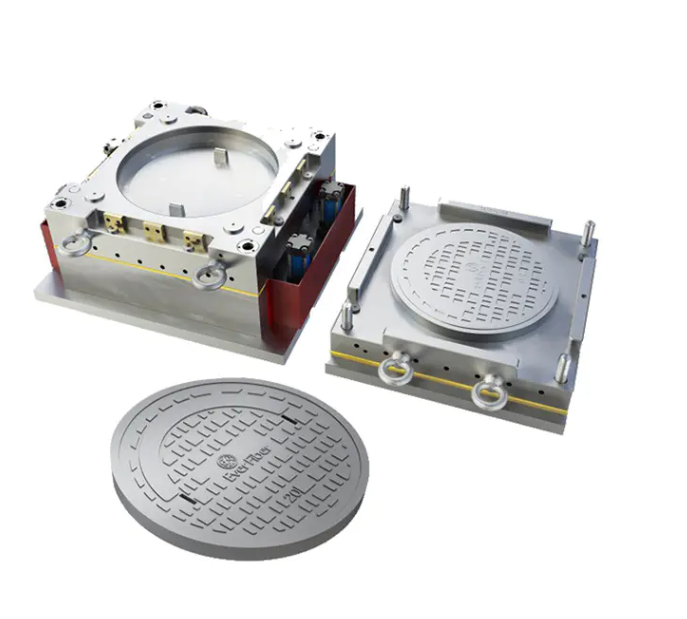
In actual workshops, performance is shaped slowly. Not in one step, but through repeated use, small environmental changes, and how people handle the tool day to day.
What Role Does Material Selection Play In Real Use?
Material choice is usually decided early, sometimes even before full production conditions are clear. But once the mould starts working, material behavior becomes more visible.
Some materials stay steady under repeated pressure. Others respond slightly each time force is applied. The changes are small at first, almost easy to ignore. Over time, they start to show in surface alignment or consistency.
There is also moisture response. Not dramatic, but gradual. Certain composite structures absorb or react to surrounding conditions, and that slowly shifts how stable the mould feels during long cycles.
So material is not just a specification choice. It becomes a long-term behavior factor.
How Do Different Factors Interact In Practice?
In real production, factors never act alone. They overlap. One condition influences another without clear boundaries.
The table below gives a simple way to understand how these elements usually behave together in day-to-day operation.
| Factor | What It Changes First | What Shows Up Later |
|---|---|---|
| Material Choice | Basic stability | Shape consistency over time |
| Structural Layout | Force movement inside mould | Uneven wear or pressure spots |
| Temperature Changes | Surface response | Slight expansion or tightening |
| Production Pressure | Load balance | Fatigue in repeated cycles |
| Surface Condition | Contact behavior | Release quality and finish |
| Maintenance Routine | Cleanliness level | Lifespan and smooth operation |
| System Compatibility | Machine interaction | Stability during repeated runs |
Nothing in this table works in isolation. In real conditions, they overlap constantly.
Why Does Structural Design Quietly Affect Stability?
Structural design is not always visible once production starts, but it controls how everything behaves internally.
If the structure distributes force evenly, the mould tends to feel stable. If not, pressure gathers in certain areas. That is where small wear marks usually begin.
Corners and edges are often the first places where changes appear. Not because they are weak, but because they naturally receive more stress during use.
It is not a sudden failure point. It is more like a slow shift in balance.
How Does The Working Environment Influence Behavior?
The environment around the mould often changes without notice. Temperature shifts during the day. Humidity rises or drops depending on conditions. Even airflow in the workshop is not always stable.
These changes do not break the mould directly. Instead, they affect how materials respond over time.
Warm conditions may make surfaces slightly more reactive. Cooler environments can tighten behavior a bit. None of this is dramatic, but it accumulates.
Dust is another factor that often gets underestimated. It does not damage structure immediately, but it can influence surface consistency.
How Does Production Pressure Change Long-Term Performance?
Every mould goes through cycles of stress. Some are light, others heavier. The problem is not the pressure itself, but the variation.
When pressure changes too often, the internal structure adjusts repeatedly. Over time, this creates uneven wear patterns.
Stable production tends to extend smoother performance. Sudden shifts in workload do the opposite.
Even downtime matters. A long pause followed by heavy operation can create a different internal response compared to continuous use.
What Kind Of Surface Changes Affect Output Quality?
The surface is where everything becomes visible. Even small changes there can affect the final result.
A clean, smooth surface helps material release more easily. Once slight wear appears, friction increases. Not always immediately noticeable, but it builds up.
Small marks or uneven texture may not stop production, but they often change consistency. That is usually when operators start noticing variation in output.
Surface condition is closely linked to handling habits. It does not change on its own.
How Does Maintenance Influence Long-Term Stability?
Maintenance is often seen as routine work, but it has a direct impact on performance.
Gentle cleaning keeps the surface stable. Harsh treatment, even occasionally, can leave long-lasting effects.
Storage conditions also matter more than expected. A stable environment keeps behavior predictable. A changing one slowly adds variation.
Maintenance does not need to be complex. What matters more is consistency.
How Does Wear Develop Over Time?
Wear rarely starts in a clear way. It begins with small signs that are easy to overlook.
Edges lose a bit of sharpness. Surface feel changes slightly. Internal response becomes less uniform.
These changes are slow. That is why they are often ignored at first.
Later, the difference becomes clearer. Output may vary slightly. Release behavior may shift.
By then, the pattern has already formed.
What Small Oversights Usually Affect Performance?
Most performance issues do not come from major mistakes. They come from small habits repeated over time.
Environmental conditions are sometimes ignored. A mould may work well in one place but behave differently elsewhere.
Handling differences between operators can also create variation. Not intentional, just natural.
Inspection is another weak point. Without regular checks, small changes stay unnoticed longer than they should.
None of these are dramatic problems. They are quiet ones.
How Do Changing Production Needs Affect Composite Mould Behavior?
Production is not static. It keeps adjusting to new demands, faster cycles, and more consistent output expectations.
That means mould behavior is also under more pressure to stay stable for longer periods.
At the same time, flexibility is still needed. Conditions are not always controlled perfectly.
So the balance becomes more important. Stability on one side, adaptability on the other.
Composite mould performance is shaped right in that balance zone.