ENG
ENG  English
 Español
 Português
 عربى
عربى 中文简体
中文简体Choosing a pallet mold factory is not something that usually happens quickly. In most cases, it is the result of comparison, observation, and a gradual building of trust.
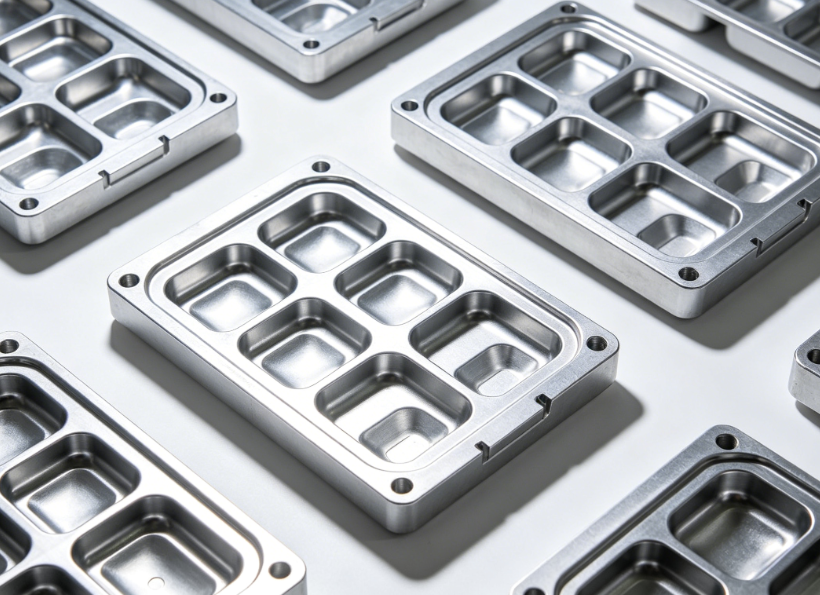
A pallet mold plays a quiet but important role in production. It does not appear in the final product directly, but it affects how stable, smooth, and repeatable the whole process feels. When the mold is well made, production tends to move without interruption. When it is not, small issues can appear repeatedly over time.
Because of that, selecting a factory is less about a single strong feature and more about how different aspects work together.
What should you notice in the early stage of communication?
Before any technical details come into play, the way a factory communicates already gives useful signals.
Some factories respond in a very general way. Others tend to ask more specific questions about usage conditions, production expectations, and working environment. The difference is subtle, but it often reflects how deeply they understand real applications.
A reliable factory usually does not rush into conclusions. Instead, it tries to understand what the actual requirement looks like in practice. That early curiosity is often a good sign.
Another point is consistency in communication. If the explanation changes too much from one message to another, it may suggest that internal processes are not fully structured.
Why does production stability matter more than appearance?
When people first look at pallet molds, the surface finish or visual impression might seem important. But in real use, appearance is not the main factor.
What matters more is whether the mold behaves the same way over time. A mold that works well once but changes in performance later can create more problems than expected.
Stable production means the mold can go through repeated cycles without noticeable variation. It also means fewer adjustments are needed during use.
Factories that focus on stability usually talk more about process control than isolated results. They tend to emphasize repeat behavior rather than one-time outcomes.
How does internal process structure affect final quality?
Behind every mold is a sequence of steps. Even if the process is not visible from the outside, it plays a major role in how the final product performs.
Factories with a clear internal structure usually move work in an organized flow. Each stage has a defined role, and transitions between stages are controlled rather than random.
When this structure is weak, small inconsistencies can accumulate. When it is strong, production feels more predictable.
In many cases, you can sense this structure even without seeing the workshop. The way information is shared, the clarity of explanations, and the way questions are handled often reflect internal organization.
What role does material handling really play?
Material selection and handling are often mentioned, but their real importance becomes clear only during long-term use.
Even small variations in preparation or storage can affect how a mold behaves under repeated production cycles. It is not always immediate. Sometimes the effect appears gradually.
A well-managed factory treats material handling as part of the entire system. It is not separated from design or production. Instead, it is connected to both.
This includes how materials are stored, how they are prepared before processing, and how they are introduced into production.
Over time, these small details influence overall stability more than expected.
How important is design thinking in pallet mold production?
Design is often where long-term behavior is shaped.
A good design is not only about structure. It also considers how the mold will be used in real conditions. This includes repeated cycles, pressure changes, and long production runs.
Some factories rely heavily on fixed templates. Others adjust design depending on application requirements. The second approach usually offers more flexibility, especially when production conditions vary.
A practical design is usually balanced. It avoids unnecessary complexity, but it also avoids oversimplification that may reduce performance.
In real use, overly complex structures can be harder to maintain. Overly simple ones may not perform consistently under continuous load.
The balance between the two is often what separates average results from stable long-term use.
How does quality control work in a real production environment?
Quality control is often described as a final step, but in practice, it is more continuous than that.
It usually starts earlier than expected. Some checks happen before production begins, while others happen during and after the process.
A more structured approach may include several layers:
- Initial review of material condition
- Monitoring during shaping or forming stages
- Stability checks after completion
- Observation during repeated use cycles
Each layer adds a level of confidence. Instead of relying on a single inspection point, the process spreads control across multiple stages.
This approach reduces surprises later and helps maintain consistency across production batches.
Why does workflow organization affect cooperation quality?
A pallet mold factory is not just a production space. It is also a system of coordination.
When workflow is clear, communication tends to be easier. When workflow is unclear, even simple requests can become complicated.
Factories with better organization usually handle tasks in a more structured way. Information is easier to follow, and expectations are clearer from the beginning.
This does not only affect production speed. It also affects how smoothly cooperation develops over time.
In many cases, workflow clarity becomes visible through communication style. Responses are consistent, explanations are aligned, and details do not change frequently.
What does long-term reliability look like in practice?
You can't tell if a manufacturer is truly reliable after just one brief exchange. Real long‑term dependability shows over time through consistent performance.
One clear marker is how well a factory handles minor tweaks to production. Reliable suppliers can make small adjustments without throwing the whole manufacturing process off balance.
Consistent performance over extended production runs is another key point. Even after long‑term continuous use, mould performance stays steady with no major shifts in quality or function.
Problem‑solving attitude also reveals reliability. Trustworthy manufacturers give straightforward, practical solutions rather than vague replies or shifting blame when issues come up.
These steady behaviours build solid trust step by step, not right away.
What are common warning signs during selection?
Spotting small red flags early is a simple way to judge a supplier's real reliability.
For instance, if their answers stay too broad and never get specific about your actual working conditions, they may lack real‑world experience with your application.
Frequent inconsistent communication with no clear explanation usually points to poor teamwork and disorganisation inside the company.
Another warning sign is when they make quick promises without asking enough about how you plan to use the mould or your operating environment.
These issues don't always mean serious problems, but they are important to watch for when choosing a supplier.
How should decision-making be approached in a practical way?
Choosing a pallet mold factory is rarely about finding a single perfect option. Instead, it is about finding a stable match between needs and capability.
A more practical approach is to look at multiple aspects together. Communication, process clarity, design understanding, and long-term behavior all contribute to the final decision.
Rather than focusing on one strong feature, it is often more useful to observe how balanced the overall performance feels.
Factories that remain stable across different areas tend to be easier to work with in the long run.
A more realistic way to understand "reliability"
Reliability is not always visible at the beginning. It is often revealed through repetition.
When processes remain stable, communication stays consistent, and adjustments are handled smoothly, reliability becomes easier to recognize.
In pallet mold production, this stability often matters more than any single technical detail.
It is not about a single moment of performance, but about how the system behaves over time.